



Badja
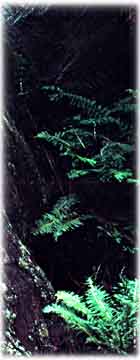
Badja is an area of rolling hills, mountains and valleys on the tablelands above the eastern escarpment, and spilling down over the escarpment into the Tuross River valley. It contains a diversity of natural environments, including tall wet eucalypt forest, dry eucalypt forest, rainforest, sub-alpine heath and forest, casuarina heath, and extensive peat bogs.
Lying around 40km east of Cooma, Badja covers most of Badja State Forest and part of Tallaganda State Forest (the Jinden Creek catchment). Badja lies between Deua and Wadbilliga National Parks.
Badja covers 23,897 ha of unprotected land, with all but 89 ha of vacant crown land being state forest.
Some of the conservation values of Badja are listed below:
Badja contains a large area of Identified Wilderness it is part of the Deua Wilderness and the Tuross Wilderness, both determined by the NSW National Parks and Wildlife Service.
Badja is a biodiversity hot spot it contains at least 11 threatened fauna species the Glossy Black-Cockatoo, Olive Whistler, Powerful Owl, Masked Owl, Sooty Owl, Yellow-bellied glider, Squirrel Glider, Golden-tipped Bat, Great Pippistrelle, and the Long-nosed Potoroo. It probably also contains the Koala.
Badja connects the Deua and Wadbilliga National Parks it forms a major escarpment corridor which is essential to the reserve design for a National Park system for the South Coast forests.
Badja contains extensive tall wet old-growth forests - with trees measured at over 50 metres high and around 10m in girth at chest height. So far over 7,000 ha of old-growth has been identified in Badja, covering almost 30% of its total area.
Badja contains the highest Tiger Quoll numbers in the Region a leading expert on quolls, Chris Belcher, has said it contains the largest known population of Tiger Quolls in New South Wales. Tiger Quolls, the largest marsupial predator on mainland Australia, are considered threatened in NSW.
Badja contains the largest natural peat bog in NSW.
Badja is essential to achieve JANIS scientific targets for a Comprehensive, Adequate and Representative reserve system. Ten forest ecosystem targets, eight old-growth forest targets, and the targets for the Greater Glider and Brush-tailed Phascogale, can be fully met by reserving this area. The vast majority of Tiger Quoll records and 45% of the Tiger Quoll target can also be met.
Badja is an area of long-standing community concern. Throughout 1992 and 1993 at least a dozen blockades of logging operations were conducted by environment groups in a campaign that ended only when all logging was removed from the blockade areas; presently no logging is conducted in Badja.