| WALLIS LAKE |
The Wallamba
of Wallis Lake
Tobwabba Art Group
& Kate Morgan*
The Wallamba Tobwabba Art Group |
|
The Wallamba live in a diverse and productive landscape, with various types of bushland as well as the resources of lake, estuary, wetlands, dune and ocean to call on. The middens in the area suggest they had abundant food, particularly seafood such as whelk, pipi, oyster, crab, cockle, Venus shell and prawn, as well as many varieties of fish from lake and ocean. Nets were used for prawning and women did most of their fishing from bark canoes using hooks of oyster and other shells. Men generally used multi-pointed spears to fish, such as spearing mullet at the beach between incoming waves.
They occasionally hunted wallabies, kangaroos and echidnas with boomerangs and spears. Smoke was used to flush out animals such as fruit bats, and digging sticks were used to gather insects or to kill small animals. Water birds provided meat and eggs.
Plants were relied on for many purposes, for instance their diet included yams and various berries and fruit, such as from fan flower (Scaevola calendulacea), pigface (Carpobrotus glaucescens), plum pine (Podocarpus elatus), black apple (Planchonella australis) and geebung (Persoonia spp). The young bark of the kurrajong yields, after soaking, a white, flax-like fibre which can be made into string and cord. Vines provided shield handgrips and cord.
One particularly useful local plant is the grass tree (Xanthorrhoea sp). The woody stalks of the flower spikes were used to make fire sticks and spears. The heart of the plant can be eaten like a cabbage. Flowering spikes can be soaked overnight to produce a sweet nectar. The resin can function as glue: the heat of a bushfire (or even from the sun) causes the resin to run into more or less rounded forms which can then be picked out. A long piece of dry, exposed pith from a stump can be rubbed with a thinner and rounded piece creating sufficient friction to start a fire.
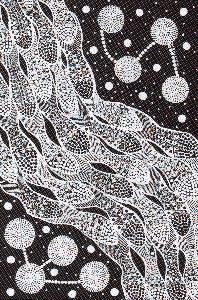
The Wallamba continue to rely on their local environment, as well as deriving inspiration from it for their artworks.
The Tobwabba Art Group is a 100% Aboriginal-owned business, and is an artists’ collective and commercial art studio. Tobwabba Environmental and Cultural Heritage Tours is affiliated with Tobwabba Art. Tobwabba can be contacted on 6554 5755 or see their website at www.tobwabba.com.au. Some of the material for this article was based on Kate Morgan’s report, Traditional Aboriginal Culture of The Great Lakes (in press).
|
|
National
Parks Association - Home Page |
|